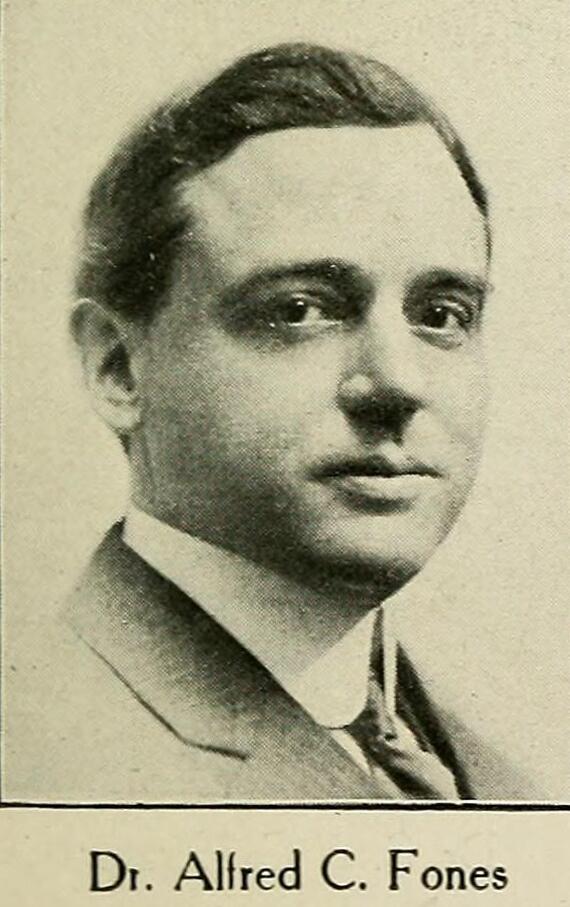
Alfred C. Fones, from a 1916 bookInternet Archive Book Images, 1916. No known copyright restrictions. Wikimedia Commons. Image source
Alfred Fones trains the first dental hygienist
1906 to 1916 · Alfred Civilion Fones (1869 to 1938)
Alfred Fones was a dentist in Bridgeport, Connecticut. He believed that cleaning teeth regularly could prevent much of the decay and gum disease he saw.
In 1906 he trained his cousin and assistant, Irene Newman, to clean and polish patients' teeth. She is often called the first dental hygienist.
In 1913 Fones opened a school for dental hygienists in Bridgeport. Its graduates went into public schools to clean children's teeth and teach them how to brush. Bridgeport saw a large drop in tooth decay among those children.
Fones also wrote the first textbook for the new profession, Mouth Hygiene, in 1916. He described a circular brushing method still called the Fones method, often taught to young children.
Fones is called the father of dental hygiene. Dental hygiene education came to Canada later, and today hygienists are a regulated profession across the country, still focused on the prevention Fones championed.
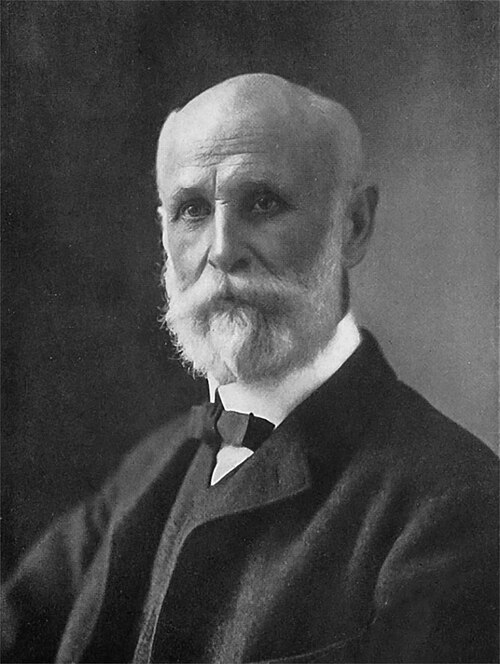
Greene Vardiman Black, CDC Public Health Image LibraryCenters for Disease Control and Prevention, 1920-01-01. Public domain. Wikimedia Commons. Image source
G. V. Black brings order to dentistry
1880s to 1915 · Greene Vardiman Black (1836 to 1915)
Greene Vardiman Black was a dentist in Illinois who was largely self-taught. He became dean of the dental school at Northwestern University in Chicago.
Black studied tooth decay closely. He grouped cavities into classes based on where they occur on the tooth, from Class I in the pits and fissures to Class V near the gumline. Dental teams still use this G. V. Black classification when they chart.
He also set out rules for preparing a cavity before filling it, and he improved dental amalgam so fillings were more reliable.
Early in the 1900s Black worked with Frederick McKay to study the brown, mottled teeth common in Colorado Springs. They found these teeth resisted decay. Later research showed the cause was natural fluoride in the water, leading to community water fluoridation. Brantford, Ontario, began fluoridating its water in 1945.
For dental hygienists, accurate charting by class and the role of fluoride in prevention both trace back to Black's work.